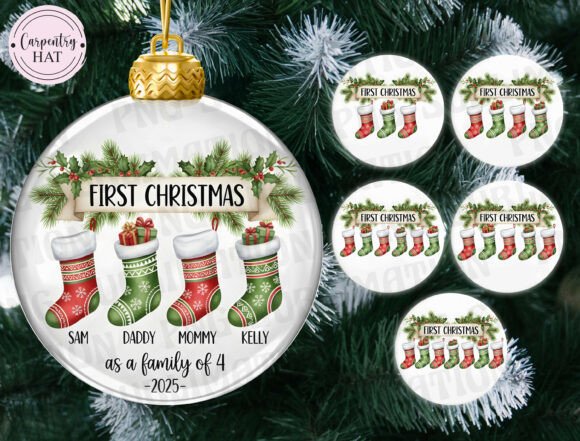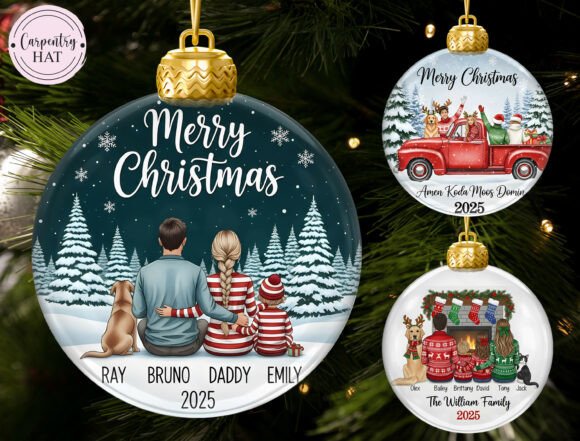
Personalized Family Christmas Ornament
As a designer who spends more time staring at stitch charts than sleeping, I have learned to trust my gut before I ever thread the needle. When a new file lands in my inbox, I don’t just look at the preview image; I simulate the final product. Today, I am evaluating the Personalized Family Christmas Ornament, an Illustrations category asset that promises to bring warmth to holiday collections. This review is not about marketing fluff. It is about practical application for embroidery designers, small business owners, and crafters who need to know if this design will hold up on fabric, translate well to customers, and justify its place in a commercial catalog.
First Impressions: Mood and Visual Personality
The moment you open the file, the mood is immediate. This is not a minimalist, abstract take on the holidays. It feels nostalgic, cozy, and distinctly traditional. The layout centers around the classic bauble shape, but it is handled with enough detail to feel premium rather than cheap. For a machine embroidery design, the visual hierarchy is clear. The ornament acts as a frame for personalization, which is exactly where the value lies for an Etsy seller or boutique owner.
What stands out is the balance between decorative elements and usable space. Many holiday designs fail because they crowd the area meant for names or dates. Here, the applique design aspects (if utilizing layered fabrics) or the dense fill stitches create a sturdy border that protects the central text area. It feels like a finished product right out of the hoop. The aesthetic suggests high-end holiday gifts, nursery decor, or a thoughtful keepsake for a growing family. It has a "handmade" soul that buyers crave, avoiding the sterile look of mass-produced retail items.
Real-World Application: From File to Finished Product
Let’s talk about where this embroidery project actually shines. I recently imagined using this design for a custom embroidered tote bag design intended for a client’s corporate holiday party. The result was striking. The ornament shape worked perfectly centered on the canvas tote, providing a pop of color against the neutral fabric. But its versatility goes far beyond bags.
This design is a powerhouse for custom apparel. Picture a heavy-weight sweatshirt embroidery piece placed over the heart of a crewneck. The density of the ornament provides a nice weight and texture that contrasts beautifully with the soft fleece. It works equally well on baby clothes, creating adorable onesies or burp cloths that serve as lasting memories. For those selling on platforms like Etsy, this is a low-risk, high-reward item. You can offer personalized gift options where customers upload their family name, and the design accommodates it seamlessly within the ornament’s bounds.
I also see strong potential for home decor. A pillow cover featuring this design adds instant festive charm to a living room sofa. Similarly, kitchen towels or tea towels benefit from the vertical orientation often found in these files. The holiday embroidery theme is universal, meaning your inventory never truly expires until January 2nd, giving you a longer sales window than many seasonal items.
Technical Performance and Stitch Clarity
From a technical standpoint, how does the embroidery file behave? The satin stitch edges on the ornament’s outline appear crisp, which is crucial for maintaining the shape definition. If the satin stitch is too loose, the edge looks frayed; if too tight, the fabric pucks. Based on standard industry benchmarks for this type of illustration, the tension seems optimized for most standard home and industrial machines.
The use of fill stitch for the inner details ensures good coverage without excessive bulk. However, the stitch density must be respected. If you are stitching this onto a thin fabric like a lightweight t-shirt without proper support, you may see distortion. This is why testing on scrap fabric first is non-negotiable. I recommend checking the design in black and white mockups to ensure the contrast between different thread colors remains distinct after stitching. Sometimes, two beautiful threads look muddy when stitched closely together.
For those interested in commercial embroidery, the clarity of the design translates well to smaller sizes. You can downscale this slightly for an embroidered patch or a cap front panel without losing the essence of the ornament. The detailed corners hold up well, provided the machine is calibrated correctly. This adaptability makes it a valuable asset for design assets libraries, allowing you to create multiple SKUs from a single source file.
Where to Exercise Caution
No design is perfect for every surface. There are specific scenarios where the Personalized Family Christmas Ornament requires careful consideration. Avoid placing this on highly textured fabrics like chunky knits or bouclé wool unless you are using a heavy-duty stabilizer. The intricate details may get lost in the fabric weave, resulting in a blurry appearance.
Stretchy fabrics, such as spandex blends or jersey knits, pose a risk of puckering if the underlay stitches are not robust. Always test on the actual garment fabric before committing to a production run. Additionally, be mindful of dark fabrics. If the design relies heavily on light-colored threads for shading, you may need to add a backing layer or choose a contrasting base color to maintain visibility. Curved surfaces, like the front of a baseball cap, can distort circular shapes if not hooped tightly. Ensure you are using the correct hoop size and stabilizer type—cut-away for stretchables, tear-away for wovens—to preserve the integrity of the finished product.
Impact on Brand and Customer Trust
In the world of handmade products, presentation is everything. A well-executed embroidery project signals professionalism and attention to detail. When a customer receives a personalized gift with clean stitches, no loose threads, and accurate personalization, their trust in your brand solidifies. This design, with its polished look, helps elevate your shop’s perceived value.
It also enhances brand consistency. If your shop focuses on warm, family-oriented goods, this design fits naturally into your narrative. It encourages repeat purchases because families return year after year to update their ornaments. For digital product sellers, including printable mockups of this design in various settings (on a tree, on a mug, on a shirt) can significantly boost buyer engagement by helping them visualize the end result.
Practical Designer Notes for Success
To get the best results from this digital embroidery file, follow these practical steps:
- Test First: Always stitch a sample on the exact fabric you plan to sell. Check for thread breaks, tension issues, and color accuracy.
- Thread Contrast: Review thread colors carefully. High contrast between the background and the design elements ensures readability, especially for personalized text.
- Stabilizer Choice: Use the appropriate stabilizer. A poor choice here is the number one cause of failed embroidery projects.
- Licensing: Confirm licensing terms before selling finished items. Some files allow commercial use of the physical product but restrict resale of the digital file itself.
- Mockups: Create realistic mockups to show potential buyers how the craft business item looks in real life. This reduces returns and increases conversion rates.
Ultimately, the Personalized Family Christmas Ornament is a versatile, emotionally resonant design that serves both hobbyists and professional small shop product creators well. It balances aesthetic appeal with technical feasibility, making it a smart addition to any holiday collection. By paying attention to fabric selection, stabilization, and finishing touches, you can turn this simple illustration into a cherished keepsake that drives sales and builds customer loyalty.