Christmas Goat Clipart: A Designer’s Embroidery Review
When I sit down to evaluate a new digital asset for my embroidery workflow, I am rarely looking at pixels. I am looking at stitches. I am thinking about how the thread will lay on fabric, how the design will hold up in a washing machine, and whether it will resonate with a customer scrolling through their phone at 10 PM. This is where Christmas Goat Clipart enters the conversation. As an illustrator categorized under Illustrations, this asset has potential, but its success depends entirely on how we translate its visual personality into a tangible handmade product.
In this review, I am putting aside the marketing fluff to look at what this design actually offers for real-world application. Whether you are an Etsy seller preparing holiday inventory or a hobbyist making a personalized gift, understanding the nuances of this clipart before stitching is crucial.
First Impressions and Visual Personality
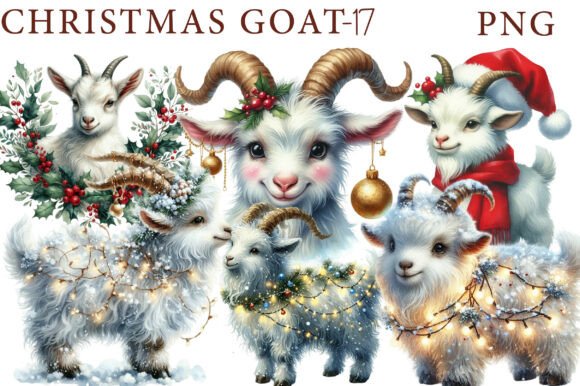
The moment you open the file, the mood is immediately established. The subject matter—a goat during the Christmas season—hits a specific cultural nerve. It is whimsical, slightly rustic, and undeniably charming. For designers who want to move away from traditional, stuffy holiday motifs, this provides a fresh angle. It feels less like a generic stock image and more like a character-driven piece that invites connection.
From a layout perspective, the composition is clean. This is vital for embroidery because cluttered designs often result in muddy stitch lines when scaled down. The negative space around the goat allows the eye to rest, which translates well to small hoop sizes. However, as a designer, I am always asking: does the line work support the structural integrity of the stitch? If the original illustration relies too heavily on thin, delicate lines without sufficient weight, those details may disappear once converted into a machine embroidery design. The initial vibe suggests a friendly, approachable aesthetic that fits perfectly into the current trend of "cottagecore" and cozy winter aesthetics.
Real-World Application: Where Does It Shine?
I recently used a similar whimsical animal motif for a custom order, and the results were telling. Christmas Goat Clipart excels in contexts where warmth and nostalgia are desired. It is not just a decoration; it is a statement piece that adds personality to functional items.
Consider the tote bag design market. A sturdy canvas tote featuring this goat creates an instant gift-ready item. The contrast between the rough texture of canvas and the smooth finish of embroidery threads brings the illustration to life. Similarly, for sweatshirt embroidery, this design offers a playful counterpoint to the heavy knit fabric. It works exceptionally well on crewnecks or hoodies intended for family matching sets or holiday parties.
Beyond apparel, think about home goods. An embroidered pillow cover or a kitchen towel featuring this goat transforms a mundane object into a boutique-style item. For baby embroidery, such as on a muslin blanket or a onesie, the softness implied by the illustration (assuming the final vector is rounded) makes it safe and appealing for nursery decor. It also serves as excellent material for an embroidered patch, which can be sewn onto denim jackets or backpacks, extending the life of the garment while adding a festive touch.
For the craft business owner, this design bridges the gap between personal expression and commercial viability. It is unique enough to stand out in a crowded marketplace yet familiar enough to be instantly recognizable as a holiday item. When you list this as a small shop product, the emotional hook is clear: it is cute, it is seasonal, and it feels handmade.
Technical Considerations and Stitch Performance
This is where the rubber meets the road. No matter how beautiful the source image is, if the digitization is poor, the finished product will suffer. When evaluating this clipart for digitization, several technical factors come into play.
- Stitch Density: Goats have fur, which can be tricky to represent in embroidery. If the design uses too much fill stitch density, it may become stiff and unmanageable, especially on stretchy fabrics. Look for a balance where running stitch or lighter fill techniques suggest texture rather than blocking it out completely.
- Satin Stitch Quality: Outlines and distinct shapes often rely on satin stitches. Ensure that the paths are closed and clean. Jagged edges in the digital embroidery file will result in puckering or loose threads in the final output.
- Hoop Size Constraints: If you plan to use this on a cap or a curved surface, the design must fit within standard hoop dimensions without losing critical detail. Small details, such as the eyes or tiny accessories, need to be large enough to be stitched clearly. If they are too small, they will vanish.
Another critical factor is thread color contrast. The original illustration likely has specific color palettes. When translating this to thread, you must ensure that dark areas do not bleed into light areas due to insufficient contrast. Always test your thread colors against your chosen fabric. A white goat on a cream sweater might lack definition, whereas a white goat on a navy blue background will pop beautifully.
Where to Exercise Caution
Not every surface is suitable for this design. Be wary of using Christmas Goat Clipart on highly textured fabrics like bouclé or heavy tweed, as the embroidery may get lost in the weave. Thin fabrics require a strong stabilizer to prevent distortion, so ensure your stabilizer choice matches the weight of the garment.
Avoid placing intricate versions of this design on curved surfaces like baseball caps unless the digitizer has specifically accounted for the curvature. Flat designs applied to curves often distort, making the goat look stretched or squashed. Additionally, if the design includes tiny lettering or very fine decorative accents, reconsider its use on items that require frequent washing, as these delicate elements are prone to fraying over time.
Design Notes for the Professional Maker
To ensure the highest quality outcome, I recommend following a strict pre-production checklist. First, always test the design on scrap fabric that mimics the properties of your final material. Check the tension and watch for any puckering.
Review the design in black and white mockups. This helps you assess the value structure and contrast without being distracted by color. If the design lacks impact in grayscale, it may struggle in color. Furthermore, inspect the small details closely. Are the eyes distinct? Is the mouth clear? These micro-details define the character’s expression.
Confirm your licensing terms before selling finished items. While the clipart is categorized under Illustrations, the rights to use it commercially vary. Ensure you have the proper license for commercial embroidery projects. Do not assume that owning the file grants unlimited rights to sell physical goods.
Finally, consider the presentation. A well-executed printable mockup can help you visualize the end result. Show the goat on different backgrounds, lighting conditions, and garment types. This not only helps you refine the design but also aids in marketing your design assets effectively.
Final Verdict
Christmas Goat Clipart is a versatile and charming asset that holds significant promise for the holiday season. Its whimsical nature aligns well with current trends in custom apparel and personalized gifts. However, its success hinges on careful digitization and thoughtful application. By paying attention to stitch density, fabric choice, and licensing, you can transform this simple illustration into a professional, high-value embroidery project. For the discerning maker, it is a tool that, when used correctly, can elevate your brand and delight your customers.